
 CONSTRUCTION & METHODS / THE DISPATCH
Steam does not make the hat
Few sights in a hat shop are as theatrical as steam rolling across felt. A black hat moves through a white cloud; the material seems to surrender; a new line appears beneath the hands. It looks like transformation because it is—but the steam is only the opening move.
Steam does not choose the crown, establish the brim or decide whether a curve belongs to the wearer. Heat and moisture temporarily make fur felt more willing to move. The shape comes from what follows: tension, stretch, pressure, smoothing, checking, cooling and repetition.
That distinction matters whether you are shaping a cowboy hat, restoring a brim after travel or blocking a body from the beginning. The steamer is not a hammer, and the felt is not disobedient. Good hatmaking is closer to persuasion.
What steam actually changes
Fur felt is already a dense structure of interlocked fibers. Applied with care, steam introduces heat and moisture that make the body temporarily more pliable. A stiff brim becomes easier to lift or lower. An open crown becomes more receptive to a crease. A felt body can be stretched over the architecture of a block.
Receptive does not mean shapeless. Different felts relax at different rates because weight, density, finish, age and previous work all matter. One body may answer after a brief pass; another may need several controlled passes with a pause between them. There is no useful universal count of seconds that replaces touch and observation.
Too little steam and the material fights every move. Too much careless heat or moisture can over-soften the area, disturb a finish, mark the surface or make one section behave differently from the rest. The aim is not maximum softness. It is enough flexibility to make the intended move without erasing the material’s character.
How to steam-shape a felt hat
For a small correction, work locally. Inspect the hat first: understand its material, finish, trim and the part of the silhouette that has actually moved. Direct the steam toward that section rather than soaking the entire hat. Keep skin clear of the steam path, let the felt relax, then make the smallest deliberate adjustment that solves the problem.
Support the hat while you work. A brim needs a clean surface or a controlled hand beneath it. A crown needs pressure placed where the line should change, not random squeezing around the whole body. Make a move, release, look at the hat from more than one angle and repeat only if the material still asks for it.
Then stop handling it. Allow the felt to cool and dry completely in the geometry you want. That quiet interval is not downtime. It is part of the shaping sequence, and rushing past it is one reason a correction can drift back.
A light home reshaping and a professional re-block are not the same job. A travel dent or softened brim edge may respond to a careful local correction. A crown that has lost its architecture, a significant fit change, an unknown vintage finish or a badly distorted brim may require a block, flange, rope, pusher, press or other controlled support. Resistance is information. It is not an invitation to add force.
The hand, the tool and the pause
The visible gesture is the hand shaping the hat, but the tool determines what that gesture can repeat. A steamer gives a controlled source of heat and moisture. A block supplies the crown’s underlying geometry. A flange or flat working surface supports the brim. A pusher helps define the break where crown becomes brim. None of these tools replaces judgment; each gives judgment somewhere precise to act.
This is why professional shaping is a sequence rather than a single dramatic bend. Steam a section. Move it. Hold or support it. Check the opposite side. Let it settle. Return if necessary. The finished line is often the result of several modest agreements with the felt, not one command.
From the Dungeon: when steam reveals the real problem
In the current Mad Hatter block work, a test exposed a problem at the rear of the form: the angle asked the felt to stretch too aggressively before it reached the straighter shaft. A thin section at the back of the print added its own anomaly. More steam would not have corrected either condition. It would only have made the felt more willing to follow flawed geometry.
That is the useful lesson inside a technical failure. Controlled heat can reveal what a tool is asking of the material. If the pull is uneven, the answer may be a revised transition, a stronger form or a different sequence—not a wetter hat. The block remains under revision; the test has already done its work by making the demand visible.
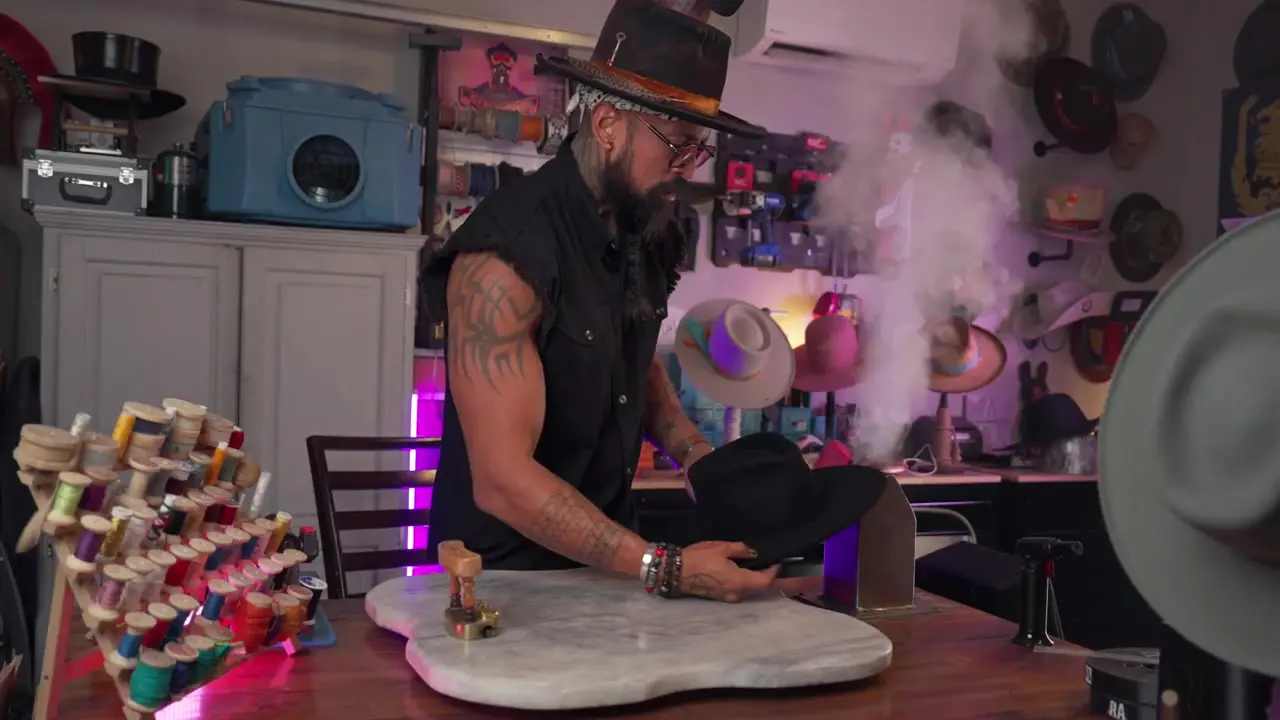
The photograph with this Dispatch comes from Ala Ancha’s own shaping lesson: La Sombra holds a black felt beside the active workshop steamer while the cloud rises between tool and hand. It is a clean picture of the real relationship. Steam opens the possibility. The hatter decides what to ask next.
Under the brim
The shape is most stable when the material is allowed to cool and dry in the geometry you want. That is true after a careful brim correction and after a full block. The pause after the movement is part of the movement.
If your felt hat needs more than a small correction—or if you want its geometry designed from the beginning—bring the question to the House. Begin with the Hat Brief, and let the material, the tools and the intended silhouette determine the right kind of work.
Continue the process
Continue the story.